
REVIEW · GUIDED WALKS AROUND VANCOUVER
Ancient Trees of Vancouver Walking Tour
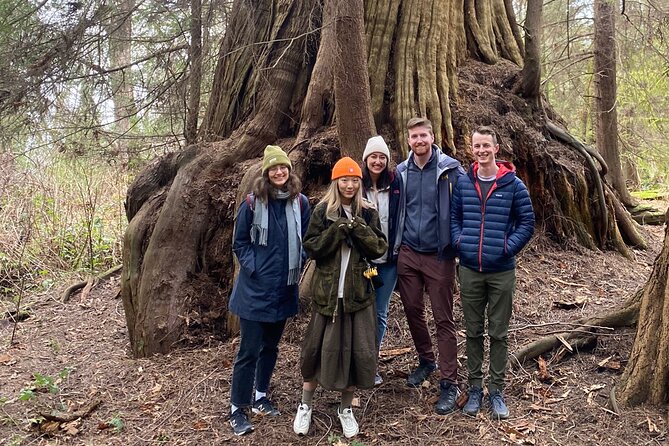
Stanley Park has a secret age. This Ancient Trees of Vancouver walk guides you through old-growth giants while Colin Spratt connects the forest to Vancouver’s deeper history. You get a hands-on feel for what makes these trees last so long, not just what they look like.
I also really like the small group cap (max 10), which keeps the pace thoughtful and your questions getting answered. The one drawback to plan for is simple, you start at Ferguson Point and there’s no pickup or drop off, so you’ll need to get yourself there and expect about 3 hours of walking on park trails.
Key things I’d plan around
- Max 10 people keeps the tour from feeling rushed or crowded
- Colin Spratt (BC Big Tree Committee member) tells stories that connect trees to people
- Old maps, postcards, and photos help you see the forest changing over time
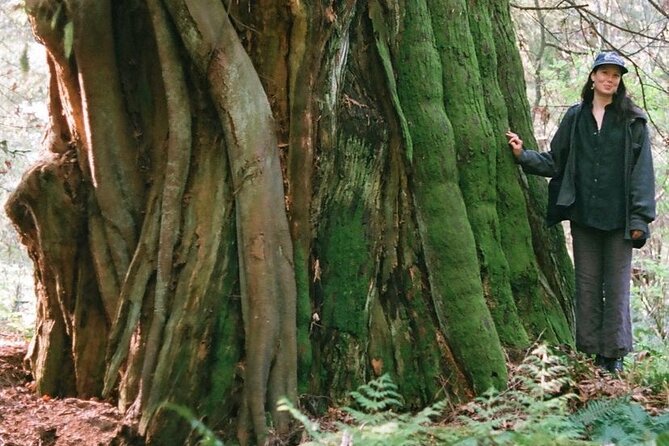
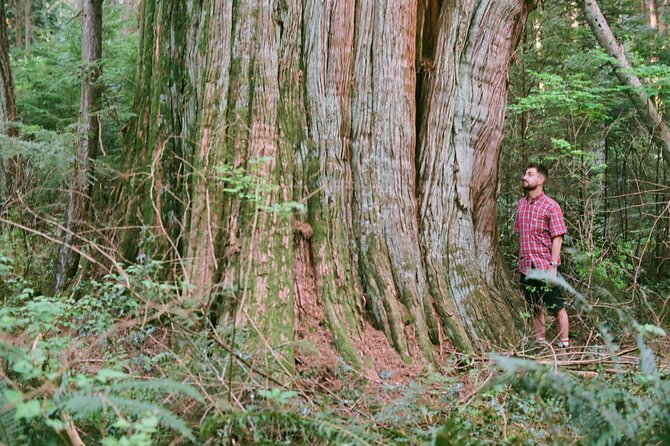
- Major old-growth trees like massive western red cedars and towering Douglas firs
- Easy walking trails make it realistic even if you are not a hardcore hiker
- Stanley Park history plus Coast Salish context goes beyond botany
Walking Stanley Park’s ancient trees, without the city getting in the way
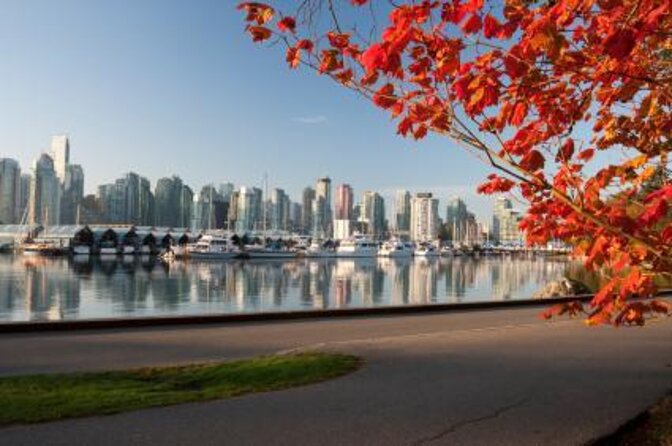
Even after you’ve seen Vancouver’s skyline, Stanley Park can still surprise you with how time slows down. This tour focuses on the old stuff, the trees that grew before the city looked like a city. You walk through a living record, then you learn how people read that record, past and present.
What makes it work is the mix of scale and story. You’re not just staring at trunks the size of small rooms. You’re also learning how old-growth forests function, why they matter for wildlife and ecosystems, and what threatens them today.
And yes, the “tree names” part is fun. But the real payoff is learning what you are looking at, how long it takes, and why a forest like this is not easy to replace once it is damaged.
Same coastline, different afternoon: these Vancouver trips are the ones people book alongside this one.
Colin Spratt, and why the small-group format matters
This is led by Colin Spratt, a well-known big tree seeker and a member of the BC Big Tree Committee. His style is part educator, part storyteller, and part protector of the forest. That matters because ancient trees can sound like trivia if your guide treats them like a checklist.
Instead, Colin ties the big facts to local context, like the original Coast Salish presence in the area for thousands of years before it became an urban park. You also get the sense that he’s not just collecting tree facts, he’s tracking them and caring about them.
The group size is capped at 10. That changes the vibe. You hear the details, you can ask questions, and you’re not spending half the walk trying to see over shoulders. It is also easier to move at the pace of the terrain, which is especially nice when you stop often to look closely.
Also, the tour runs in English, and the booking confirmation comes at the time you reserve. Mobile tickets are used, so you can keep things simple on your phone.
The big trees you will meet in Stanley Park (cedars, Douglas fir, and a maple claim)
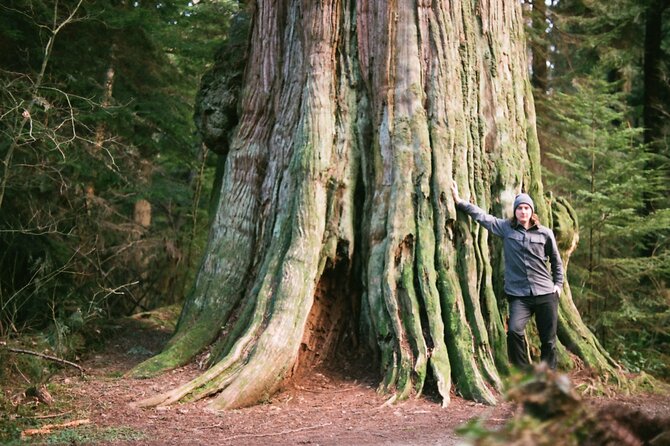
Stanley Park’s old-growth trees are the headline here, and the tour delivers specific “go see this” targets. Expect to learn about towering Douglas firs and giant western red cedars, including trees described as roughly 600 years old for the firs and around 1,000 years old for the cedars.
One reason I like tours that spotlight particular trees is that it turns a walk into a mission. You stop at the right moments, then your guide helps you understand what makes each tree special.
Western red cedars and the “grandfather tree” idea
Western red cedar is a star on this walk. You learn how cedar supports forest life, and how it has long supported human life too. In the stories from the tour, cedar is described as the tree of life, because its fibers and bark were used for real everyday needs like weaving textiles and creating practical materials.
In one of the highlights, you learn about how cedar is used for building, including longhouses and canoes, plus how bark supported clothing and rope. It is the kind of detail that makes the forest feel less like a museum display and more like a relationship between people and place.
You may also hear that some older cedars can be hollow, and that this can create habitat for animals. The tour treats it as both a lesson in aging and a lesson in how life repurposes what death leaves behind.
Douglas firs and what old age looks like in a living forest
Douglas firs add another layer because they show how structure matters in forest ecosystems. You do not just learn how tall or old a tree is. You learn what old forests do for the system, including how they support regeneration and complex habitat over long periods.
The largest known maple in Canada
There is also a standout maple tree connected to a Canada-wide claim. You’ll hear about the largest known maple tree in all of Canada. Even if you do not memorize every measurement, learning that a city park holds this kind of specimen makes the entire walk feel bigger than you expected.
- Victoria and Butchart Gardens Day Trip from Vancouver
★ 4.5 · 2,242 reviews - Gastown Historic Walking Food Tour
★ 5.0 · 1,863 reviews - The Grand Bicycle Tour by Cycle City Tours
★ 5.0 · 1,827 reviews - Capilano Suspension Bridge Park Ticket
★ 4.5 · 1,814 reviews - Vancouver: Hop-on Hop-off Sightseeing Tour with 10 Stops
★ 3.9 · 1,807 reviews
Old maps, postcards, and photos that show the forest’s changing story
One of the smartest parts of this tour is that it uses visuals, not just talking points. You get old maps, plus about 120-year-old postcards and photographs. That is a big deal because it turns “history” from an abstract word into something you can compare in front of your eyes.
It also helps you understand that Stanley Park did not become what it is in one day. The guide uses archival material to show how the park and the forest have been seen over time, including periods that came before the modern idea of an urban park.
You’re also given the original human connection to the land. The tour includes the Coast Salish history of the area, framed as thousands of years of presence before today’s park era. That makes the walk feel grounded, not like a nature detour that ignores the people side.
Why this storytelling method is worth your time
A forest walk can become repetitive if it only covers biology. This tour avoids that by pairing ecology with human records. When your guide holds up an old map or postcard, you start noticing patterns, like how the idea of “the same place” keeps shifting.
It also makes your photos afterward more meaningful. You stop taking the “pretty tree picture” and start capturing the story you learned while standing there.
Old-growth ecology, nurse logs, slow time, and why 3 hours fly by
Ancient trees teach patience. They grow slowly, they recover slowly, and they require stable conditions to thrive. The tour makes that clear through the way it explains forest processes.
One of the most memorable concepts covered is the idea of nurse logs. You learn that fallen trees can nurture new life. It is not just a poetic idea. It is a real ecological mechanism, where wood on the forest floor supports seedlings and helps the next generation start.
You also hear about how old-growth forests can carry life through unusual structures. Hollow trees can be part of habitat, and you may even hear that hollows can support animals. That kind of detail changes how you look at what you might otherwise call “decay.” You start to see it as part of the cycle.
The tour’s “tree of life” human ecology angle
Another layer is how the tour connects cedar to traditional knowledge. Stories include how communities tested trees with antlers before carving canoes. That gives you a practical sense of how people interacted with trees based on observation, not guesswork.
You might also learn that cedar naturally resists fire and rot. Again, it is not just a fun fact. It explains why cedar has remained so important across time and how it supports the forest in changing conditions.
One of the most thought-provoking ideas shared is that 99 percent of a tree is dead. The point is not to make trees sound doomed. It is to explain that dying and decomposition protect and nourish new life. On a forest walk, that changes everything about what you notice.
Conservation threats, in plain terms
The tour also covers ecological importance and the threats old-growth forests face today. Without turning it into a doom speech, it frames the issue clearly: slow-growing ecosystems need careful protection. If you care about forests at all, this part helps you move from passive awe to real understanding.
And because the stories are delivered in an engaging way, the walk feels lighter than “3 hours of trees.” The time passes fast.
The 3-hour flow: from Ferguson Point into Stanley Park’s trails
The tour starts at Ferguson Point, 7501 Stanley Park Dr, Vancouver, BC V6G 3E2. It ends back at the meeting point, so you do not need to worry about being dropped elsewhere.
Since it’s a walking tour, you should expect stops. The whole design depends on slowing down to look at particular trees and to see the supporting visuals like old maps and photos. Bring your patience for the “look closer” moments, because that’s where the learning sticks.
A few practical notes make it easier:
- You’ll want comfortable shoes for park trails, because the experience is built on walking, not driving between viewpoints.
- You can plan around a steady pace rather than sprinting.
- Morning and afternoon tours are offered, so you can match it to the rest of your day in Vancouver.
Also, service animals are allowed. And the tour is described as suitable for most people, though the tour is still outdoors and involves walking.
Value check: what $56.33 buys you in the real world
At $56.33 per person for about 3 hours, this is not the cheapest thing in Stanley Park. But it is also not priced like a generic photo stroll.
You are paying for:
- An expert guide, Colin Spratt, who brings big-tree hunting experience and committee connections
- A small group size capped at 10
- A guided walking tour that focuses on specific ancient trees, not random sightseeing
- Historical visuals, including old maps, about 120-year-old postcards, and photographs
- The time and care to explain what you are seeing, plus ecological context
One detail that improves the value is that there’s no extra admission ticket cost listed for the activity. That means you can treat it as a focused add-on to Stanley Park without stacking another entry fee.
If you like nature tours, but you hate leaving with only vague impressions, this tends to be worth it. You leave with names, stories, and a better mental map of what old-growth ecosystems do.
Who should book this tour, and who might want a different plan
This tour is a great fit if you enjoy:
- Trees, forests, and ecology, especially when the guide connects the dots
- History that includes Indigenous context, not just colonial-era dates
- Small-group experiences where you can ask questions and hear answers
- Families, including children who enjoy asking questions, since the guide is described as patient and engaging
If you are the type who likes to move quickly from one landmark to the next, you might feel impatient. This is a “stop often” experience. It also centers on walking trails, so if you want a tour that is more about views from a vehicle, you might prefer a different format.
But if you’re open to a slower pace, the payoff is huge. One common thread in the tour feedback is how it changes the way people look at trees afterward.
Should you book Ancient Trees of Vancouver?
Book it if you want Stanley Park to feel like more than scenery. I think it’s a smart use of a few hours in Vancouver because it teaches you what the park actually contains, including standout ancient trees and the ecology that makes old-growth forests work.
Skip it only if you strongly prefer not to walk trails or you want a tour focused strictly on big city sights. Here, the point is the forest, and that focus is exactly why it is memorable.
If you are deciding between a quick pass through Stanley Park and a deeper experience, this tour is the one that helps you see the park with new eyes.
FAQ
How long is the Ancient Trees of Vancouver walking tour?
It runs for about 3 hours. The activity ends back at the meeting point.
What does it cost?
The price is $56.33 per person.
How big is the group?
The tour has a maximum of 10 travelers, so it stays small.
Where does the tour start?
The tour starts at Ferguson Point, 7501 Stanley Park Dr, Vancouver, BC V6G 3E2, Canada.
What is included in the experience?
It includes a walking tour with an expert guide, ancient trees highlighted along the trail, and old maps plus about 120-year-old postcards and photographs used to tell the story.
Is pickup or drop-off provided?
No. Pick-up and drop-off at your hotel is not included, and the tour starts and ends at the meeting point.
Can I cancel for a full refund?
Yes, free cancellation is available. You can cancel up to 24 hours in advance for a full refund, and changes inside 24 hours are not accepted.
More Tours in Vancouver


More Tour Reviews in Vancouver
Just added around Vancouver
- Banff, Moraine Lake, Lake Louise and Columbia Icefield 4 Day Tour★ 4.5 · 3 reviews
- Fireworks Dinner Cruise★ 3.5 · 4 reviews
- Vancouver Waterfront Guided Bike/E-Bike Tour★ 5.0 · 3 reviews
- Vancouver UNESCO Biosphere Reserve Wildlife Scenic Boat Tour★ 5.0 · 5 reviews
- Vancouver: Sunset Boat Cruise with Complementary Bubbly★ 4.3 · 4 reviews
- Vancouver Tour/Car/Grandville Island/Queen Elizabeth/China T★ 5.0 · 3 reviews
Guided Walks Around Vancouver, compared.
 ★ 5.0Gastown Historic Walking Food TourFrom $1161,863 reviews
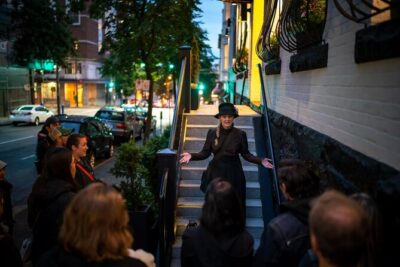 ★ 5.0Vancouver Lost Souls of Gastown Walking TourFrom $291,273 reviews
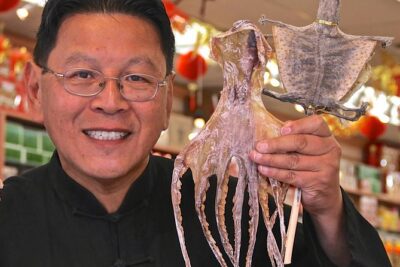 ★ 5.0A Wok Around Chinatown: Culinary and Cultural Walking Tour Led by a ChefFrom $122610 reviews
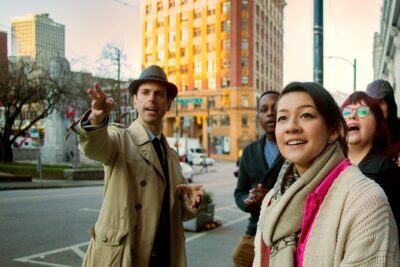 ★ 5.0The Forbidden Downtown and Gastown Walking TourFrom $29476 reviews
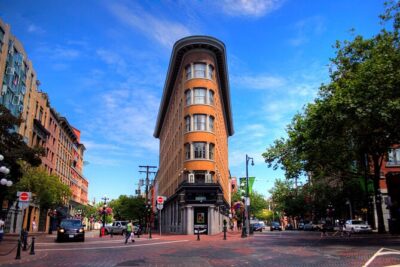 ★ 4.5Gratuity-Based Vancouver City Highlights 3 Hour Walking TourFrom $5320 reviews
 ★ 5.0Vancouver Secrets of Stanley Park Walking TourFrom $29208 reviews
 ★ 5.0Experience Gastown Vancouver’s Elite Walking Food TourFrom $80134 reviews
 ★ 4.1Private Walking Tour with a LocalFrom $43110 reviews
More Vancouver days out