

REVIEW · SEA TO SKY GONDOLA & SUMMIT VIEWS
Sea to Sky Highway Self-Guided Driving Audio Tour
Sea to Sky Highway gets way more interesting in your car. This self-guided drive pairs your phone with GPS-triggered stories and offline maps, so you can cruise the 75+ mile route from Lost Lagoon toward Whistler at your own pace. You’ll be hearing hands-free audio and offline maps working together as you go.
I like two things a lot. First, it is simple to start, there is no staff member waiting for you. Second, the sound plays through your car system, so you can use Bluetooth, USB, AUX, or Apple CarPlay, which is a big deal with a rental.
Here is the one consideration. The advertised 2 to 3 hour window assumes mostly drive-by stops and quick viewpoints, but some optional hikes are long, like the St Mark’s Summit trail, so plan extra time if you want to do them all.
Key highlights that make this audio drive worth your time
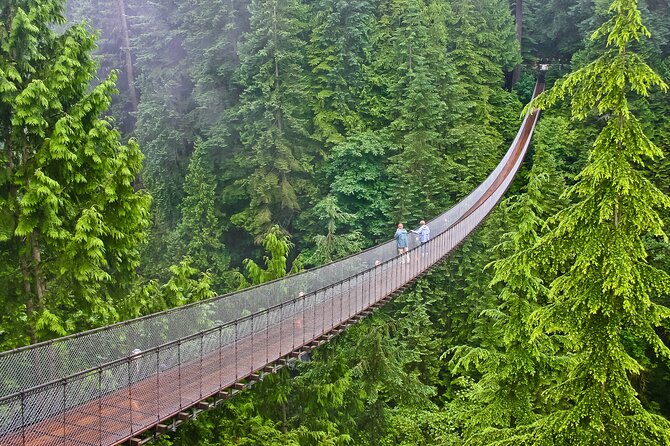
- GPS-triggered stories that play as you reach each stop, so you do not have to constantly tap your screen
- Lifetime access, no expiry, so you can replay it on repeat trips without paying again
- Price per car for up to 4 people, which often beats per-person tours when you travel as a small group
- Offline navigation support via maps after you download, helpful on routes with patchy signal
- A mix of viewpoints and optional hikes, letting you scale the day to your fitness and time
What you get: 90+ Sea to Sky stories in a 2 to 3 hour drive
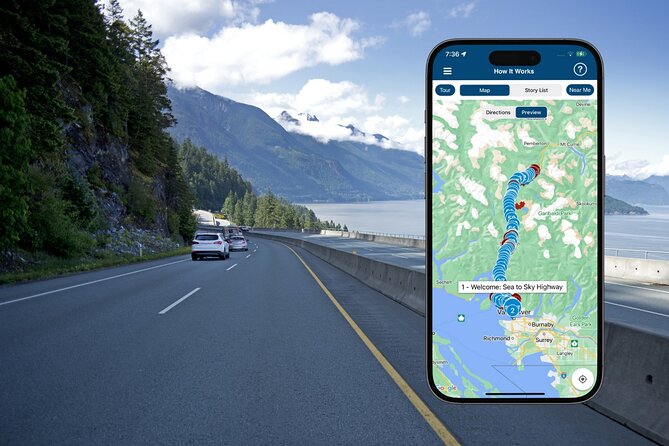
This is built as a self-guided driving tour, roughly 2 to 3 hours for the main route. It is long enough to feel like a real road trip, but short enough to fit between other plans in Vancouver and Whistler.
The big promise is location-based audio. You start at the Whistler Visitor Centre and then the next story begins automatically as you reach each cue. There are 90+ stories across more than 75 miles, with a lot of them tied to natural features, Indigenous history, geology, and local lore.
One more smart detail: most of the listed stops are designed as quick pull-offs or short breaks, with many marked around 5 to 10 minutes. That makes it easier to keep the day moving even if you are not stopping at every option.
A few more Vancouver trips worth a look before you book

Price and value: paying per car is the real bargain
The tour costs $16.99 per group, up to 4 people. That pricing structure matters because you will likely hear the same narration whether one person is riding or four are riding. If you are splitting the cost across a couple, or a small family, it can feel like a bargain compared with guided tours that charge per person.
Also, you get new, lifetime access with no expiry. That means you are not locked into using it only once. If you return to the Sea to Sky later, or you want to re-drive a section, you already own the stories.
The tour itself is also lightweight: it includes the app and offline maps, but it does not include attraction tickets or reservations. So your total day cost mostly comes down to what optional stops you choose to pay for on the spot, like the gondola.
Phone-to-car setup: hands-free audio with offline maps
You will download the separate Action’s Tour Guide App after you book. The key rule is timing: you must download it while you have strong wifi or cellular connectivity, then it works offline after that.
On the road, you can play the audio through your car in a few ways: Bluetooth, USB, or AUX. It is also compatible with Apple CarPlay, with Android Auto described as on the way. If you also plan to step out for quick walks at viewpoints, you can consider headphones for those sections, since you may want clear sound over wind and traffic.
Start is mostly plug-and-play. No one meets you at the start point. You simply open the app once you are onsite, choose the right version if there are multiple, and begin. From there, the audio is meant to run on its own based on where you are.
A small practical tip: when you’re trying to enjoy the scenery, slow down where it is safe, then let the audio continue. The tour works best when you stick to the route and roughly the tour speed limits.
Vancouver to Cypress: Lost Lagoon, Lions Gate Bridge, and the St Mark’s Summit choice
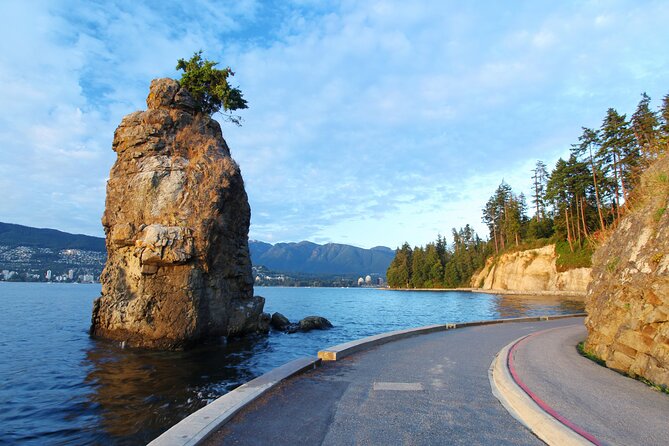
Your drive begins in the Whistler area and then the stories guide you through the route toward the Vancouver side. The first stop is Lost Lagoon in Stanley Park. It is a calm body of water tucked inside the park, and the story behind it connects to Emily Pauline Johnson, an Indigenous Canadian poet. Even if you only pause briefly, this is a nice way to start with meaning, not just views.
Next you get a story that is all about timing and sightlines: crossing Burrard Inlet on the Lions Gate Bridge. The narration points out the peak shapes ahead and connects the naming to the twin lions idea. The payoff here is that it makes you look up and out, not down at your phone.
Then you transition into the Cypress Provincial Park area. You get a fork in the road, with an optional detour. You can either go for Cypress Provincial Park viewpoints, or consider hiking toward St Mark’s Summit. The detour is about ten miles one way, so this is not a casual shuffle.
If you want the summit, the tour explains the trail approach. The trail begins at Cypress Creek Lodge and is about seven miles round trip, considered intermediate, with most people taking around four to five hours. That is a real commitment. If you are trying to keep the drive within the 2 to 3 hour window, treat this as a separate day activity.
Even if you skip the hike, you still benefit from this section because it sets up the theme of the day: the Sea to Sky route is not just about scenery, it is about how people moved through this region, and how the land shapes what you can see.
Sea to Sky Highway as an ancient route: Squamish and Stó:lō connections
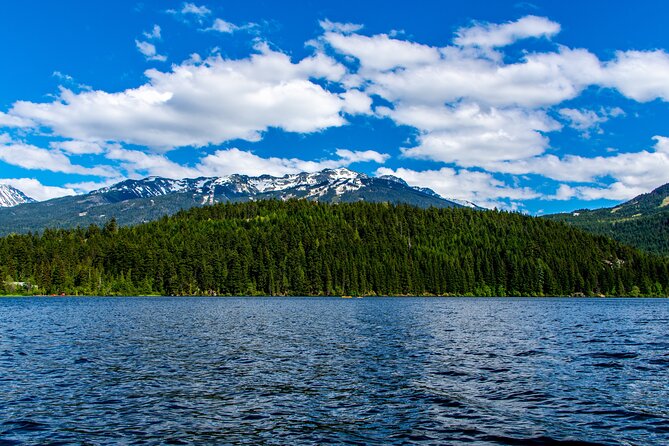
One of the most interesting stops is the one that reframes the highway itself. You are driving along the Sea to Sky Highway, but the narration reminds you that beneath much of it was an ancient footpath used by the Squamish and Stó:lō Nations. It connected the two tribes and supported trading.
This is the kind of story that changes how you feel about pulling over. Suddenly, you are not just looking at views, you are passing through a living corridor of movement and exchange. Even a quick stop becomes more than a photo moment.
The tour moves on, but it keeps that same approach: every feature is tied to a place, a name, and a reason it matters.
Waterfalls, monsters, volcanoes: Crystal Falls, Anvil Island, Watts Point, and Murrin Lake
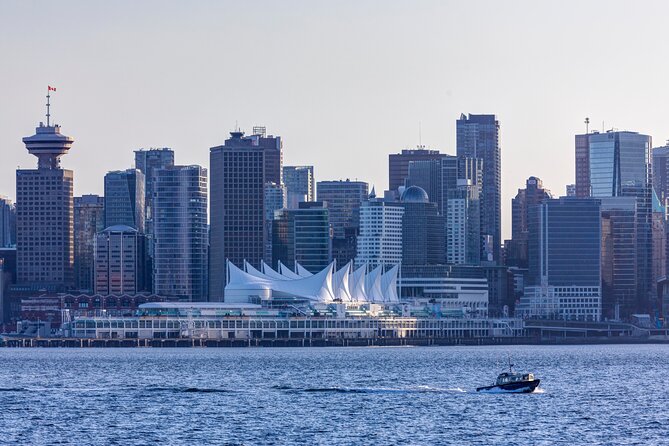
Right after the highway story, you get Crystal Falls on Crystal Falls Road and Glendale Avenue. Many people rush past it, and the tour basically hands you permission to slow down. If you like roadside waterfalls, this is an efficient stop.
Then comes the spooky fun of Anvil Island. The story ties the island to a serpent, Sínulhkay̓, said to live on the highest peak and watch people far below. The narration includes the darker legend of hypnotizing villagers and devouring them. Whether you take it as myth or as cultural memory, it is a memorable change of pace from geology and hiking.
Next is Watts Point Volcanic Centre, where the story turns scientific. You learn that the mountains are largely volcanic, and Watts Point marks where much of the volcanic material erupted. The narration also gives a timeline reassurance, saying it has not erupted for 90,000 years. That is a good bit of context that makes the rocks feel less random.
After that, you switch back to something calmer at Murrin Provincial Park. This is a practical stop if you want your legs back for a moment. You can do an easy 1.5-mile stroll around the lake, or take the more challenging Jurassic Ridge Trail, a 2-mile loop that climbs almost 700 feet for panoramic views. This is one of the better “choose your effort” moments on the route.
One drawback to watch for in this whole stretch is time drift. If you hop into an extended hike and still want to catch later viewpoints, you might feel rushed. Keep one option on standby and let the day decide the other.
A few more Vancouver trips worth a look before you book
- Vancouver to Whistler Seaplane Day Trip: Self-Guided Adventure
★ 5.0 · 53 reviews - Western Canada Self-Driving Audio Guide English and German
★ 4.4 · 20 reviews - Vancouver: Self-Guided Smartphone Walking Tour of Gastown
★ 4.0 · 15 reviews - Vancouver Old Town Treasure Hunt: Self-Guided Walking Game
★ 4.5 · 12 reviews - Stanley Park Self Guided Bike Tour
★ 4.1 · 12 reviews
Sea to Sky Gondola and Shannon Falls: where the short stops can still be big
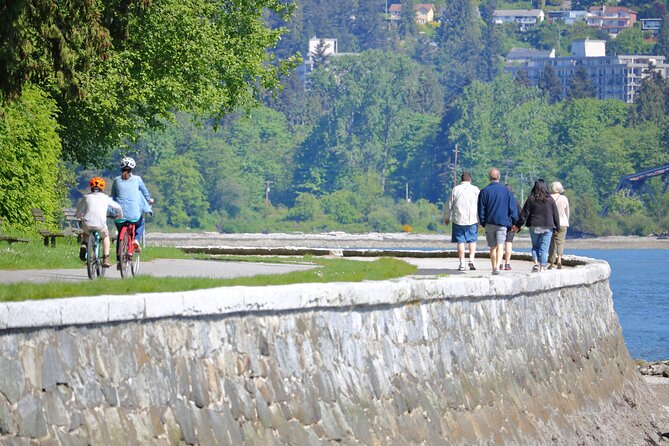
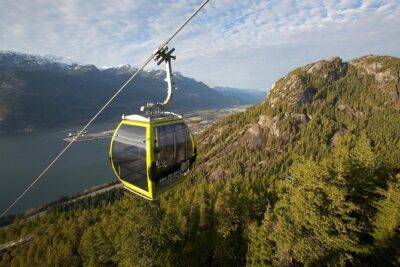
The tour hits one of its coolest highlights with Sea to Sky Gondola. It takes passengers nearly 1,000 meters above sea level to a lodge with an amazing viewing platform. This is not just a story break. It is a full experience layered onto your drive.
Then you are at Shannon Falls Provincial Park, home to a 1,000-foot waterfall. The park includes a boardwalk around the base, and the hike to the falls is quick, about 20 minutes. This is perfect if you want water, sound, and a stretch without committing to a long trail.
From there the route gets serious for hikers. At the Stawamus Chief Trail area, expert hikers can turn right to access a trail that climbs 2,300 feet to the top of The Chief. If you are not up for that kind of effort, the tour suggests continuing driving straight for the standard viewpoint experience.
The narration also names Stawamus Chief itself, noting it stands over 2,300 feet above the sound and mentioning Ed Cooper as the first to summit. That detail is small, but it makes the mountain feel like a story with chapters, not just a big rock.
Next is Eagle Run Vista Point. The tour points out a bridge ahead with good views and gives you a quick detour for a chance at spotting an eagle. Expect the detour to take about 5 to 10 minutes. If you are the type who likes wildlife but not long waits, this is a nice fit.
Edith Lake and Alice Lake: four-lake walking loops and lake names with meaning
The tour keeps stacking in water and quiet. Edith Lake is dominated by four lakes: Alice, Edith, Fawn, and Stump. The narration notes that most lake name origins are lost, but Edith Lake has an exception where the story is explained. Even without doing a full hike, stopping here makes the route feel slower and more personal.
Then you reach Alice Lake Provincial Park, which is a good leg-stretcher. The most popular walk is the Four Lake Trail, an easy 4-mile loop that goes past all four of the park lakes, typically under three hours. If you want something that is long enough to feel like exercise but not so long it hijacks your whole day, this is one of the best options.
A practical note: lake walks are great, but they also eat into time fast if you stop for photos and linger. If you are trying to keep your day tight, plan to do the trail once, not twice.
Tantalus lookout and Cheakamus River: myths, mountains, and dam debates
Next is Tantalus lookout, tied to Mount Tantalus, which the narration identifies as 2,608 meters from base to summit. It also explains the Greek myth angle, connecting the name to Tantalus, one of Zeus’s sons. It is a small dose of mythology that works well while you look at peaks.
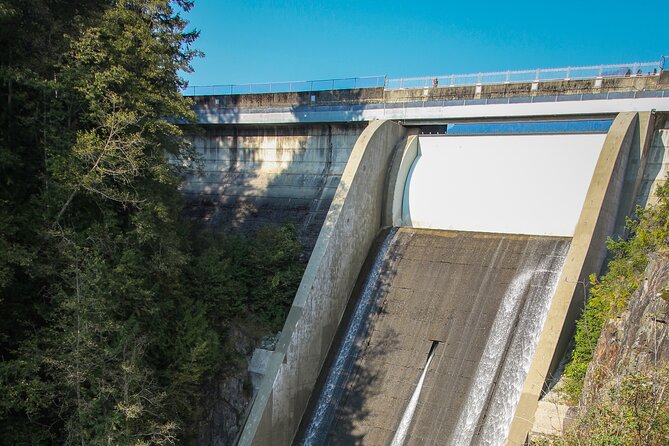
Then the tour turns to water power with Cheakamus River. You are driving along it, and you get a chance to glimpse the Cheakamus Hydroelectric Dam. The narration says it has been around since 1957 and has recently been the source of controversy. I like this because it reminds you that scenic routes also have modern infrastructure and modern debates.
There is also an optional extreme hiking detour. At Rubble Creek Trailhead, the tour describes a brutally challenging 15-mile trail climbing to Black Tusk Mountain. It is an all-day affair, so it is not something you should do on whim if you still want to reach Whistler with daylight.
If you do want one more nature stop without committing to a whole hike, you can stay focused on the drive-by viewpoints and keep the hiking optional for the next trip.
Daisy Lake to Whistler Creek: Metis naming and the ski origins of Whistler
You finish with more water and a strong sense of place. Daisy Lake is named by Joseph William McKay, described as being of Metis descent. The narration also gives a helpful heads-up that Metis can be used in different ways depending on context, either tied to the historic Metis community in Manitoba or used as a general term for mixed European and Indigenous heritage. If you like when a route’s stories teach you how to think, this is a good moment.
Finally, the tour reaches Whistler Creek, also known locally as the Creek near Creekside Village. The narration connects it to Whistler Mountain skiing history. It says the area was the original base, with only a single six-person gondola back then, compared to the 79 lifts you can find today. That contrast gives the ending a satisfying punch, like a mini history lesson on how a place grows.
Your tour concludes back at the Whistler Visitor Centre at 4230 Gateway Drive, with the app supporting you if you want to pause and resume during the day.
Practical tips for keeping this drive smooth and fun
Here is how I would make this tour feel easy, not like another checklist.
Download first, even if you think you have signal. The tour requires you to download while in strong wifi or cellular connectivity, then it works offline. If you gamble and wait, you risk losing audio right when you want it most.
Choose a stopping style before you leave. If you want the 2 to 3 hour estimate, treat most stops as quick photo and audio moments. If you want longer breaks, pick just one hike or one full-ticket experience, like the gondola, then keep the rest drive-by.
Use the right sound setup. If you are mostly in the car, car speakers via Bluetooth or AUX make the experience effortless. If you step out for walks, consider headphones so you do not miss narration.
Be realistic about hikes. Some optional options are the kind of effort you plan for, not fit in. St Mark’s Summit and Rubble Creek are clear examples. If you are short on time or energy, skip them and still enjoy the route.
Go slow where it matters. The tour has viewpoint stops and bridge areas, so safe pull-offs and normal driving habits are part of the experience.
Who this audio drive suits best
This is a good fit if you want the Sea to Sky without hiring a guide, and without relying on cellular service to keep your day running. It works especially well for couples and small families because the price is per car for up to four.
It is also a great match if you like stories that explain place names, Indigenous history, and geology alongside the scenery. The narration does that job, and it does it in short segments so you do not feel trapped in a long lecture.
If you expect a constant, high-energy commentary all the time, you might find it less captivating than you hoped. The format is designed for driving cues and flexible pacing, so some people will enjoy it more than others depending on their style.
Should you book the Sea to Sky Highway self-guided audio tour?
I’d book it if you want a low-effort, high-reward way to turn the Sea to Sky drive into a story-filled day. Offline maps, hands-free GPS-triggered audio, and a price that works for up to four people make it a smart value, especially if you are already renting a car.
Skip or scale back if you are planning to chase every hike option. The route includes serious trail commitments, and the fast 2 to 3 hour plan is really for drive-by enjoyment plus one or two optional stops.
If you are curious and you like mixing scenic viewpoints with meaning, this audio tour is an easy yes. It helps you notice more, without making you rush.
FAQ
How long does the Sea to Sky Highway self-guided driving audio tour take?
The tour is designed for about 2 to 3 hours to complete, depending on how much you stop and whether you choose optional hikes.
How much does the tour cost?
It costs $16.99 per group, up to 4 people.
Do I need tickets or reservations for stops like the gondola?
Attraction passes, entry tickets, or reservations are not included. You would handle any paid attractions separately.
Does the audio work without cell service?
Yes. It includes offline maps, and after you download the app with good connectivity, it works offline.
Do I need to meet someone at the start?
No. This is self-guided. You go to the start point, open the app onsite, and the stories begin automatically based on your location.
Can I play the audio through my car stereo?
Yes. Audio playback is compatible with Bluetooth, USB, or AUX, and it is compatible with Apple CarPlay.
What if I want to do hiking detours?
Some options are optional and can take a lot longer than quick stops. For example, St Mark’s Summit is about a seven-mile round trip and usually takes most people around four to five hours.
Can I cancel for a full refund?
Yes, free cancellation is available. You can cancel up to 24 hours in advance for a full refund.
More Guided in Vancouver


More Tours in Vancouver




More Tour Reviews in Vancouver

Just added around Vancouver
- Banff, Moraine Lake, Lake Louise and Columbia Icefield 4 Day Tour★ 4.5 · 3 reviews
- Fireworks Dinner Cruise★ 3.5 · 4 reviews
- Vancouver Waterfront Guided Bike/E-Bike Tour★ 5.0 · 3 reviews
- Vancouver UNESCO Biosphere Reserve Wildlife Scenic Boat Tour★ 5.0 · 5 reviews
- Vancouver: Sunset Boat Cruise with Complementary Bubbly★ 4.3 · 4 reviews
- Vancouver Tour/Car/Grandville Island/Queen Elizabeth/China T★ 5.0 · 3 reviews
Sea to Sky Gondola & Summit Views, compared.
 ★ 5.0From Vancouver: Whistler & Sea to Sky Gondola with Shannon FallsFrom $1731,640 reviews
 ★ 4.8Whistler, Sea to Sky Gondola, and Shannon Falls Day TripFrom $1411,134 reviews
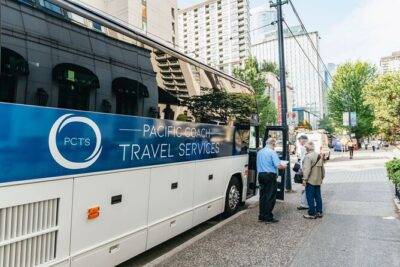 ★ 5.0Whistler and Sea to Sky Gondola Tour + Shannon FallsFrom $161882 reviews
 ★ 4.5Whistler & Sea to Sky Gondola Day Trip from VancouverFrom $185725 reviews
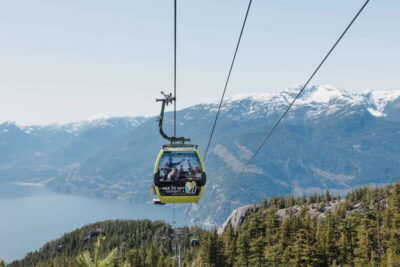 ★ 4.7Sea to Sky Gondola and Whistler Day TripFrom $156636 reviews
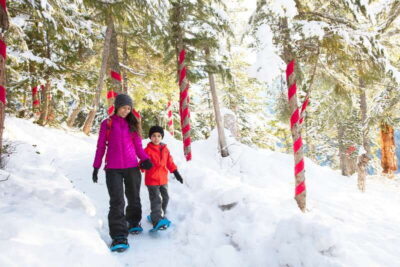 ★ 4.8Squamish: Sea to Sky Gondola Admission TicketFrom $55432 reviews
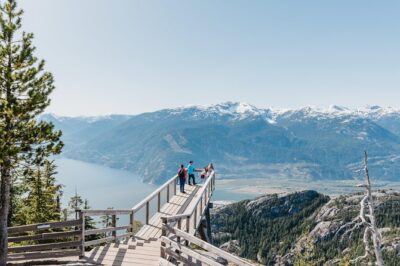 ★ 4.5Sea to Sky Gondola TicketFrom $58388 reviews
 ★ 5.0Whistler and Sea to Sky Gondola, a Fire and Ice Discovery TourFrom $180153 reviews
More Vancouver days out